
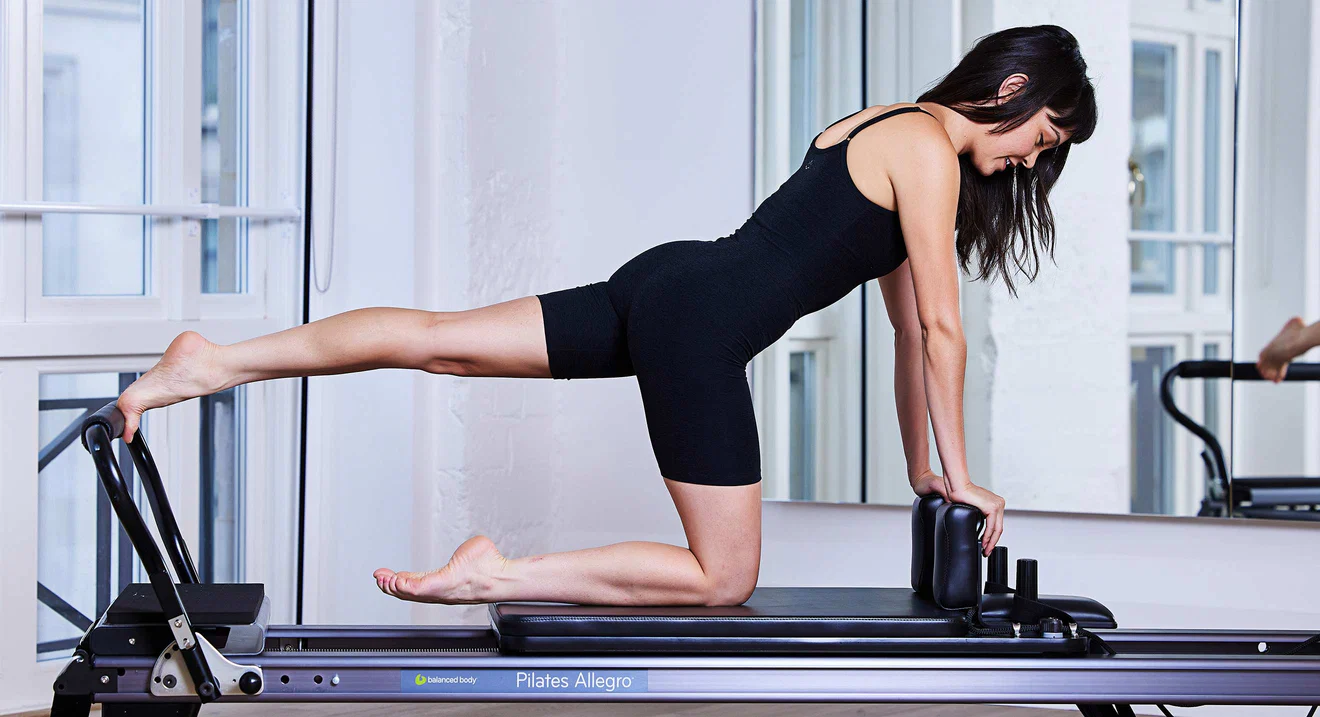
Injuries do not heal cleanly.
The tissue heals. The pain resolves. The practitioner returns to activity feeling, broadly, normal.
But the movement pattern that developed during the injury period — the limping gait, the shoulder hike, the trunk rotation to avoid a painful range — does not automatically disappear when the tissue heals. It persists, embedded in the motor cortex as a learned movement solution to a problem that no longer exists.
This is a movement compensation pattern. And on the pilates reformer, Singapore’s kinesiologists see these patterns exposed with a clarity that floor-based assessment rarely achieves.
Why Compensation Patterns Persist After Injury
Pain changes movement immediately and automatically.
When a structure is injured, the nervous system protects it by redistributing movement demands to other structures. The hip that hurts begins to bear less weight. The shoulder that impinges begins to elevate slightly to reduce the compression at the subacromial space. The lower back that aches begins to rotate more to reduce the lumbar flexion loading.
These protective strategies are intelligent responses to acute pain. The problem is their persistence.
The motor cortex learns movement patterns the same way it learns any skill: through repetition. A protective movement pattern maintained for weeks during injury recovery is practised hundreds of times daily. The nervous system consolidates it. It becomes the default pattern, even after the original stimulus for protection is removed.
The practitioner who has finished physiotherapy and been discharged as recovered is often moving with a fundamentally different pattern than before their injury. Not dramatically different — they are not visibly limping or hunching. Subtly different in ways that redistribute mechanical load across joints in patterns that drive secondary problems months or years later.
Why the Reformer Exposes What Floor Assessment Misses
Static assessment can identify gross compensation patterns. An experienced assessor can see significant pelvic obliquity, obvious shoulder asymmetry or marked weight shift in standing position.
Subtle compensation patterns are different.
They emerge under load and at movement speeds that reveal the limits of the compensatory strategy. The pattern that is invisible in static standing becomes apparent when the practitioner is asked to control a moving carriage against spring resistance through a specific joint range.
The reformer creates this revealing loading context in several ways.
The carriage’s movement vector is fixed. The exercise constrains the direction of movement in a way that floor-based exercise does not. When a compensation pattern causes the practitioner to deviate from this constrained movement vector, the deviation is immediately visible as an off-track carriage movement, an asymmetric spring compression, or a carriage that stops short of the expected range on one side relative to the other.
The reformer requires bilateral symmetry in exercises that load both sides simultaneously. A leg press on the reformer with both feet on the foot bar requires each leg to contribute equally to the carriage movement. Asymmetric contribution is visible as an unequal spring compression pattern and felt as a carriage that wants to track off-centre.
These signals are objective, specific and immediately observable — qualities that subjective pain reporting and general movement assessment cannot match.
The Most Common Compensation Patterns Singapore’s Kinesiologists Find
Post-ankle sprain compensation is among the most prevalent presentations.
The chronic subtalar instability that poorly rehabilitated ankle sprains leave produces a persistent weight shift toward the uninjured side, a reduced push-off from the injured foot, and a slight trunk lean toward the uninjured side during single-leg weight-bearing activities.
On the reformer, this pattern is visible during standing split-stance exercises as an asymmetric contribution from the two legs, a tendency for the injured side’s leg to disengage from full drive force as the range increases, and a carriage path that tracks slightly toward the dominant side.
Post-lower back injury compensation includes the common pattern of hip flexor dominance as a substitute for impaired spinal extensor activation. The practitioner has learned to extend the hip using the hip flexors’ paradoxical action in certain positions rather than through the posterior chain that is actually designed for this function.
On the reformer, this pattern appears during supine leg press as a tendency for the pelvis to anteriorly tilt as the carriage extends — the hip flexors are pulling the pelvis forward as a compensatory strategy for initiating the movement rather than allowing the glutes and hamstrings to drive the carriage extension as intended.
Post-shoulder injury compensation typically involves the substitution of cervical side-bending and elevation for glenohumeral abduction when reaching overhead. The practitioner has learned to achieve the visual appearance of an overhead reach by raising the shoulder girdle and bending the neck rather than by elevating the arm through the true glenohumeral range.
On the reformer, this pattern appears during overhead reach exercises as a visible shoulder elevation and neck deviation that occurs before or instead of genuine shoulder joint movement.
How the Reformer Fixes What It Finds
Identifying a compensation pattern is only useful if the subsequent programme addresses it.
The reformer’s specific advantage for compensation pattern correction is the ability to constrain the compensatory movement while requiring the correct movement to occur.
For the ankle compensation pattern, exercises that constrain trunk lean through the reformer’s hand strap support while requiring full weight-bearing symmetry through both feet train the correct bilateral loading pattern while removing the option to compensate through trunk deviation.
For the hip flexor dominance pattern, exercises that position the pelvis in posterior tilt through specific box positioning on the reformer prevent the anterior tilt that enables the compensatory strategy, requiring the glutes and hamstrings to initiate the movement because the compensatory option has been architecturally removed.
For the shoulder compensation pattern, exercises that constrain shoulder elevation through specific strap tension and arm position while requiring genuine glenohumeral movement train the correct pattern while making the compensatory one mechanically impossible within the exercise constraint.
Yoga Edition develops its reformer programming with this compensation pattern correction framework as a foundational principle, ensuring that sessions address the root cause of movement dysfunction rather than simply strengthening the compensatory patterns that are making it worse.
